Space War Watch
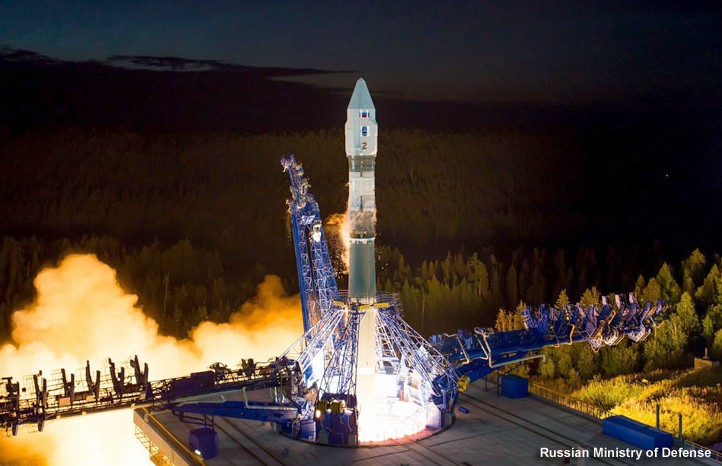

A Russian military satellite, Cosmos 2612, has maneuvered into the same orbit as ICEYE-X36, a U.S.-registered radar satellite run by the Finnish-founded company ICEYE that supports Ukraine (CSIS). Public tracking data have put the two within a few kilometers of each other since Oct. 16. No hostile act has been documented. This page tracks whether Russia is setting up the first attack on a Western satellite in orbit, and what would show it.
Cosmos 2612 has moved into the same orbit as ICEYE-X36, a radar satellite that supports Ukraine. On Oct. 17 two independent satellite trackers, Jonathan McDowell and Marco Langbroek, said it maneuvered on Oct. 15–16 to stay alongside, within a few kilometers; McDowell called it, to his knowledge, the first rendezvous of two active satellites in low orbit without one owner’s approval. Russia has tested releasing projectiles from satellites and has called commercial satellites aiding Ukraine possible targets. No hostile act has been documented, and no government has commented. Our Oct. 24 check will confirm whether it holds.
What would change this rating ↓
spacewar.america2.newsGet America 2.0 in your inbox
Analysis of Russian influence, information warfare and the networks behind them. Free; unsubscribe anytime.
How far apart are they?
America 2.0's estimate of the distance between Cosmos 2612 and ICEYE-X36, recomputed every two hours from public U.S. tracking data. Dots are our estimates at each new set of orbital data; hollow squares are distances reported by analysts before our tracking began; the shaded band shows the projected range if neither satellite maneuvers. Below about 2 km, public data cannot resolve the gap.
Loading the latest orbital estimate…
Latest reports
New reporting from major outlets and official sources, listed as it appears. Our monitoring adds headlines from major outlets automatically. "Checked" means our software fetched the full report and confirmed it supports its headline. "Reviewed" means an editor checked it against its source. "Auto" items have not been checked yet. Tap a label for our note. None of this is an endorsement. Our assessment is the rating above.
- 15 Oct, 10:00 AMCould Russia Be Poised to Use an On-Orbit Weapon Against a Commercial Satellite? (CSIS)
reviewed ▾
An editor checked this report against its source. (2026-10-17) - 14 Oct, 8:00 AMThe Integrity Flash, Issue 155: Cosmos 2612 – Climbing Out to Close In (Integrity ISR)
reviewed ▾
An editor checked this report against its source. (2026-10-17)
What would change this assessment
We rate the risk from what can be seen: orbital data anyone can check, and on-record statements from governments and the companies involved. America 2.0 recomputes the distance between the two satellites every two hours from public U.S. tracking data.
- partly seenThe Oct. 24 hold test. Our projection from public data puts the closest contact around Oct. 18–20. Left alone, Cosmos 2612 would drift roughly 15 km or more behind ICEYE-X36 by Oct. 24. If it is still within a few kilometers on Oct. 24, it has maneuvered to stay alongside, and the shadowing is deliberate. Two independent trackers, Jonathan McDowell and Marco Langbroek, said on Oct. 17 that Cosmos 2612 has already maneuvered to stay alongside (McDowell; Langbroek). Our Oct. 24 check will confirm whether it holds.
- partly seenA closer approach or a release. Cosmos 2612 moving to within about 1 km and holding there, or a new object separating from it. Russia has tested releasing projectiles from satellites before (Defense News). On Oct. 17 public tracking data put Cosmos 2612 within one to two kilometers of ICEYE-X36 (Langbroek), and under one kilometer by America 2.0’s calculation (CelesTrak), closer than such data can reliably measure. Whether it holds there is not yet known.
- not seenHarm to the ICEYE satellite. ICEYE-X36 stops working, makes an unplanned maneuver, goes silent or breaks up, or ICEYE reports interference. We have found no public comment from ICEYE.
- not seenA government on the record. U.S. Space Command, the Pentagon, the State Department, Finland or another ally naming the approach. We have found no official statement.
- not seenInterference attributed by a government. Jamming, dazzling or a cyberattack on a Western satellite, attributed by a government with evidence.
- not seenA destructive test or debris event in orbit by Russia.
- not seenWould move down: Cosmos 2612 drifts away from ICEYE-X36 and does not return.
What is actually known
- Russia launched six satellites, Cosmos 2609 to 2614, in April 2026. In May five of them made fuel-heavy maneuvers into the orbital plane of the ICEYE satellite, and Cosmos 2609 came within 2.5 km on May 26. None stayed in that plane (CSIS).
- Beginning Sept. 30, Cosmos 2612 made a series of maneuvers that brought it back into the ICEYE satellite's plane at nearly the same altitude (CSIS). On Oct. 12 it fired its engine again and settled into that plane about 475 km behind, slowly gaining (Integrity ISR, citing commercial space-tracking firms that support the U.S. military's Joint Commercial Operations cell).
- By Oct. 16 the gap had closed to a few kilometers. America 2.0's calculation from public U.S. tracking data (CelesTrak) puts Cosmos 2612 about 3 km behind ICEYE-X36, in the same plane, moving a few meters per second relative to it. An independent analyst working from Space-Track data put the closest approach on Oct. 16 at 4.5 km (Radio & Nukes). Public orbital data are accurate to roughly a kilometer or a few, so these are estimates, not measurements.
- Astrophysicist Jonathan McDowell, who tracks the satellite catalog and doubted the May approaches, confirmed on Oct. 17 that Cosmos 2612 made “a single slow pass” of ICEYE-X36 “at a distance of a few km” on Oct. 16. On Oct. 17 he said new tracking data show Cosmos 2612 maneuvered on Oct. 16 and is “stationkeeping within 5 km or less” of ICEYE-X36 — to his knowledge “the first LEO rendezvous of two active satellites where the owner of one of the sats did not give approval” (McDowell on X), an “unprecedented step by Russia if correct.” He is waiting for more data to confirm, and does not think it “quite violates the Outer Space Treaty” (McDowell on X).
- Dutch satellite tracker Marco Langbroek, who says he was initially skeptical, said on Oct. 17 that maneuvers by Cosmos 2612 starting Sept. 30 “were clearly designed to bring the two objects very close and synchronise their orbital periods, orbital altitude and eccentricity.” His charts of U.S. tracking data show a final adjustment on Oct. 15–16. He called it “an RPO without consent” — a rendezvous and proximity operation the satellite’s owner has not agreed to — and cautioned that “attribution is very difficult in space” (Langbroek on X).
- CSIS calls plane-matching maneuvers like these unusual because they burn scarce fuel; a satellite in the same plane can move close to another “with little additional fuel expenditure” (CSIS).
- Russia has tested releasing objects from its own satellites. In 2020 Cosmos 2543 released one at up to 186 meters per second, and U.S. Space Command called it a test of a space-based anti-satellite weapon (Defense News). CSIS notes no public information shows Russia has done this near a non-Russian satellite (CSIS).
- In 2022 a Russian diplomat told a U.N. committee that Western use of commercial satellites to help Ukraine was “provocative” and that such “quasi-civilian infrastructure may be a legitimate target for a retaliatory strike” (SatNews).
- We have found no public comment on Cosmos 2612 from ICEYE or the Russian government.
An emerging space war theater
What happens in orbit is one front in a wider contest over the satellites Ukraine depends on. America 2.0 tracks the others:
- Starlink in Ukraine (closed; final rating Confirmed): who capped Ukraine's military Starshield service in October. Our assessment: Elon Musk proposed slowing Ukraine's Starshield service, President Trump ordered it, and the Pentagon carried it out.
- Is the US Cutting Ukraine Off? (Likely cutoff): whether Washington is withdrawing support, from satellite service to intelligence sharing and weapons.
- Starlink Sabotage in Europe (Likely): arson at Starlink ground stations in Poland and Bulgaria; Poland blames Russian intelligence.
Together they track pressure on Ukraine's space links in orbit, on the ground and from Washington.
Claims in circulation
The most-shared claims, and what public sources can confirm.
Confirmed“A Russian satellite is tailing a Western satellite that helps Ukraine.”
Watching“Russia should knock out Starlink and Western communications, and doing so would crash the U.S. economy.”
Sergey Glazyev, State Secretary of the Union State of Russia and Belarus, wrote on June 27 that Russia should disable Western communications satellites, “including the notorious Starlink constellation,” adding that the weapon needed “may not be entirely conventional” (BUSINESS Online). By August he was arguing that striking communications would burst a U.S. AI bubble (Nezavisimaya Gazeta). On Aug. 22 Konstantin Malofeev, owner of Tsargrad, relayed Glazyev's case in a column urging strikes on Starlink and listing a nuclear detonation in space as the only option “fully ready” (Tsargrad). In July former Roscosmos chief Dmitry Rogozin wrote that destroying Starlink would end the war in two to three weeks (Euromaidan Press). Glazyev holds a government post and said this on the record. A large attack on Western satellites and cables could plausibly shake markets already worried about an AI bubble. What is not shown is whether these proposals have become Russian policy. That is the question this tracker watches.
Disputed“It's a routine inspection; everyone does this.”
Pro-Kremlin commentary on X. Close approaches can be benign, CSIS notes, but deliberately matching the orbit of another country's commercial satellite is unusual, and CSIS found no public case of Russia testing such capabilities near a non-Russian satellite (CSIS).
Out of date“The Russian satellite is 475 km away and won't be close until late October.”
Accurate for Oct. 12–13 (Integrity ISR), and still widely repeated. By Oct. 16 public data put the satellites a few kilometers apart.
Unconfirmed“Russia is about to attack the ICEYE satellite.”
Inferred from Russia's past weapons tests and its 2022 warning. CSIS says policymakers “should assume Cosmos 2612 could take an action that threatens” the satellite, but intent is unknown and no hostile act has been seen (CSIS).
Unlikely“An attack on the satellite could set off Kessler syndrome and wreck low orbit.”
Malofeev’s August column proposes releasing “hundreds of thousands of metal balls” and says “the Kessler effect will work” (Tsargrad). Kessler syndrome is a chain of collisions that produces debris faster than it decays, over decades; one breakup does not start it (Kessler et al.). The two satellites fly at about 543 km. A close-range strike there would make far fewer, slower fragments than a missile test; even after Russia’s 2021 missile test at about 480 km, nearly two-thirds of the tracked debris fell out of orbit within a year, though the rest could take more than a decade (SpaceNews). Most Starlink satellites now fly 40–80 km lower, after SpaceX moved them down from 550 km (America 2.0 count of CelesTrak data; Reuters). A nuclear blast is a separate case; see the next claim.
Unlikely“Russia could set off a nuclear blast in orbit to knock out Starlink and other satellites.”
Malofeev’s August column lists a nuclear detonation in space, an electromagnetic pulse or artificial radiation belts that could burn out “hundreds and thousands of satellites,” and says only the nuclear detonation is “fully ready” (Tsargrad). The Secure World Foundation’s review of public reporting says the Russian nuclear anti-satellite capability the US has described “has not been deployed nor tested” (SWF); in 2024 the White House called it “not an active capability that’s been deployed” (CBS News). A blast would be indiscriminate: radiation trapped in low orbit would take nearly 300 days to disperse, most commercial satellites are not hardened against it, and Russian satellites and the crews of the International Space Station and China’s station would be at risk too (SWF). The 1962 Starfish Prime test disabled at least six satellites, a significant share of those then in orbit (SWF), and Malofeev concedes Russia’s own Rassvet network flies at almost Starlink’s altitude (Tsargrad). Satellites knocked out at once could not steer clear of each other; one study put the time to a likely collision, if no satellite could maneuver, at about five and a half days in June 2025 (CRASH Clock study). Placing a nuclear weapon in orbit would violate the Outer Space Treaty, and testing one there the Partial Test Ban Treaty; Russia is party to both (SWF).
Context analysts will raise
- Shadowing has not, so far, meant attack. Russia has repeatedly parked satellites in the orbits of U.S. reconnaissance satellites; in 2025 analyst Marco Langbroek called Cosmos 2588's pursuit of USA 338 “the fourth time in five years,” and none ended in an attack (Universe Magazine). After the May approaches to ICEYE, Jonathan McDowell said “the orbital data shows that nothing of the sort is happening,” and Bart Hendrickx said chance was “more likely” (Meduza). What has changed since: one of those satellites came back, by deliberate maneuvers, and is now a few kilometers away. In May 2024 the United States told the UN Security Council that Russia’s Cosmos 2576 was “likely a counterspace weapon” deployed “into the same orbit as a U.S. government satellite” (SWF).
- The United States now says it has weapons in orbit too. In September Air Force Secretary Troy Meink said the U.S. “has on-orbit space control weapons” (Carnegie). Moscow answered by renewing its call for a treaty banning weapons in space (Reuters), and Russia can be expected to cast any move near ICEYE as a response.
- One satellite is not Ukraine's whole picture. ICEYE-X36 shares its orbital plane with ICEYE-X37 and X38, and Ukraine has access to the wider ICEYE constellation; which satellite serves Ukraine is not public (COMSPOC). Disabling X36 alone would not blind Ukraine, which suggests any action would be as much a signal as a military effect.
- Public data have limits. Distances from public orbital data are accurate to roughly a kilometer or a few, and two objects this close can be confused in tracking data. Confirmation from a radar tracker or a government would settle it. Which Kosmos number belongs to which of the six satellites is not certain; Jonathan McDowell's catalog marks each with a question mark (GCAT). The object we track is U.S. catalog number 68762.
- The stakes are legal and allied. ICEYE-X36 is registered in the United States, which under the Outer Space Treaty bears responsibility for it (U.N.). ICEYE was founded in Finland, a NATO member. NATO has said attacks “to, from, or within space” could lead to invoking Article 5, decided case by case (NATO).
- Russia is building its own Starlink. Rassvet, a constellation run by the company Bureau 1440, is meant to give Russian forces drone control and communications free of Western networks, and Russia has contracted satellite manufacturing from a Chinese company, an Atlantic Council analysis says. Ukraine’s chargé d’affaires in Washington, Denys Sienik, warns that if it launches by the end of 2026 or early 2027, “Russia will be able to strike targets within Ukraine virtually in real time” (Atlantic Council).
- Non-destructive options are likelier, and harder to pin down. Debris at this altitude would also endanger Russia's own satellites, including its new Rassvet internet constellation, a cost even Starlink's loudest Russian critics concede (Tsargrad). Jamming, dazzling or a cyberattack would be harder to attribute. A 2024 CSIS analysis argues the opposite risk too: with far fewer satellites, “Russia has little to lose from a disruption to space access” (CSIS).
Who is tracking it
- CSIS Aerospace Security Project (Clayton Swope, Chantal Li) published the analysis that brought the approach to wide attention on Oct. 15 (CSIS).
- Integrity ISR, a space-domain analysis firm, reported the Oct. 12 maneuver in its ISR University newsletter, citing commercial space-tracking firms that support the U.S. military (Integrity ISR).
- COMSPOC and LeoLabs, commercial space-tracking firms, published the timeline of the May approaches (COMSPOC on X).
- Public data: the U.S. Space Force publishes orbital elements for both satellites on Space-Track, and CelesTrak republishes them. Anyone can check the distance.
- America 2.0 recomputes the distance every two hours from that public data and will report the Oct. 24 hold test here.
What independent experts say
- Jonathan McDowell, astrophysicist: Cosmos 2612 “made a single slow pass of ICEYE X36 at a distance of a few km and a relative speed about 20 km/hr” on Oct. 16; “Waiting for new orbital data to see if it manuevers to stationkeep or not” (McDowell on X).
- Clayton Swope and Chantal Li, CSIS: “No one should assume to know what Russia will do next with Cosmos 2612, but the potential for a threat is there” (CSIS).
- They add that Moscow “may be willing to take that risk, believing the West will not respond forcefully,” and urge the United States and Europe to decide in advance how they would respond to a hostile act in space (CSIS).
What to watch next
- Oct. 24: is Cosmos 2612 still within a few kilometers of ICEYE-X36? If so, it has burned fuel to stay.
- Any new object catalogued from the April launch, which could mean something was released.
- A statement from ICEYE, U.S. Space Command, the Pentagon or Finland.
- The other five satellites from the same launch. Our data show Cosmos 2614 crossing near ICEYE-X36 around Oct. 21 on a slightly different orbit, a fast pass rather than a rendezvous.
- Russian attacks on Ukraine's satellite links on the ground and in orbit, which we follow on our Starlink in Ukraine and Starlink sabotage trackers.
Timeline
- Apr. 16Russia launches Cosmos 2609 to 2614 from Plesetsk (CSIS).
- MayFive of the six maneuver into the ICEYE satellite's orbital plane; Cosmos 2609 passes within 2.5 km on May 26 (CSIS).
- Aug. 22Konstantin Malofeev, Tsargrad's owner, publishes a column urging strikes on Starlink, citing Sergey Glazyev's call to disable Western communications satellites (Tsargrad).
- Sept. 30Cosmos 2612 begins two weeks of maneuvers back into the ICEYE satellite's plane (CSIS).
- Oct. 12A 27.9 m/s burn puts Cosmos 2612 in the same plane and altitude, about 475 km behind (Integrity ISR).
- Oct. 15CSIS warns Russia could use an on-orbit weapon against the commercial satellite (CSIS).
- Oct. 16Public tracking data put the two satellites a few kilometers apart (CelesTrak; Radio & Nukes).
- Oct. 18–20Our projected closest contact, under about 1 km, too close to resolve with public data.
- Oct. 24Our hold test: without further maneuvers the satellites would be roughly 15 km or more apart.
Key sources
- CSIS: Could Russia Be Poised to Use an On-Orbit Weapon Against a Commercial Satellite? (Oct. 15)
- Integrity ISR: The Integrity Flash, Issue 155
- CelesTrak: public orbital elements for the April 2026 launch